
Wave Soldering vs. Reflow Soldering
Wave soldering and reflow soldering are two core processes in electronics manufacturing, each suited to different component types and production needs.
Wave Soldering
Wave soldering forms solder joints by passing component leads through a wave of molten solder, mainly used for through-hole components.
Process Steps:
PCB preparation and flux application
Through-hole component insertion
Soldering via solder wave
Cooling and solidification
Advantages: High efficiency, ideal for mass production, simple process
Disadvantages: Limited to through-hole components, unsuitable for high-density or miniaturized designs
Reflow Soldering
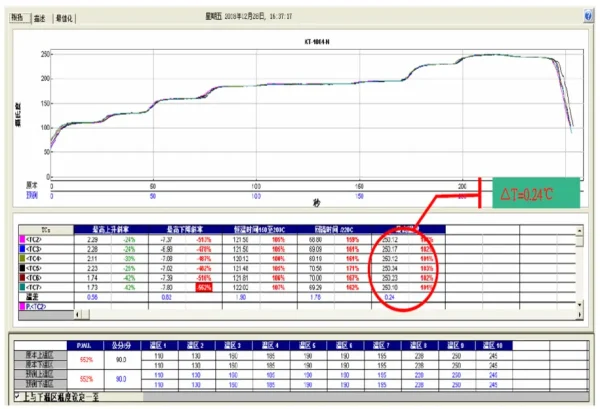
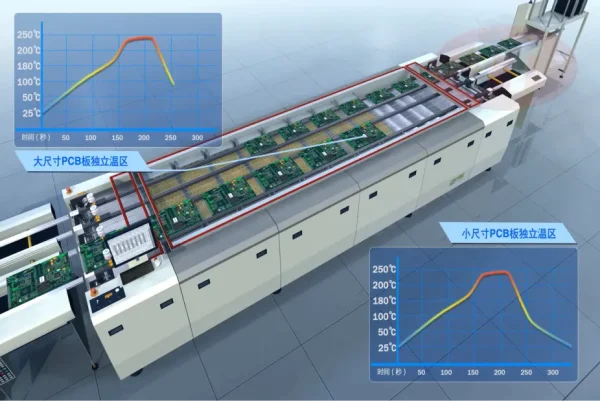
Reflow soldering uses controlled heating to melt solder paste, bonding surface-mount components (SMT) to the PCB.
Process Steps:
Solder paste printing with stencil
Automated component placement
Heating in reflow oven
Cooling and solidification
Advantages: High precision, suitable for miniaturized and complex boards, supports mixed assembly
Disadvantages: Higher equipment requirements, complex process control
Conclusion
Wave soldering is best for high-volume through-hole assembly, while reflow soldering is the preferred choice for SMT and modern compact electronics. In practice, manufacturers often combine both methods to balance efficiency and quality.